The Portfolio Diet: A Practical Way to Help Lower Cholesterol
If you’ve been told your LDL cholesterol is high, you’ve probably heard some familiar advice: eat more fibre, reduce saturated fat and include more plant foods.
That’s all useful advice, but there is also a specific dietary approach that brings several cholesterol-lowering foods together.
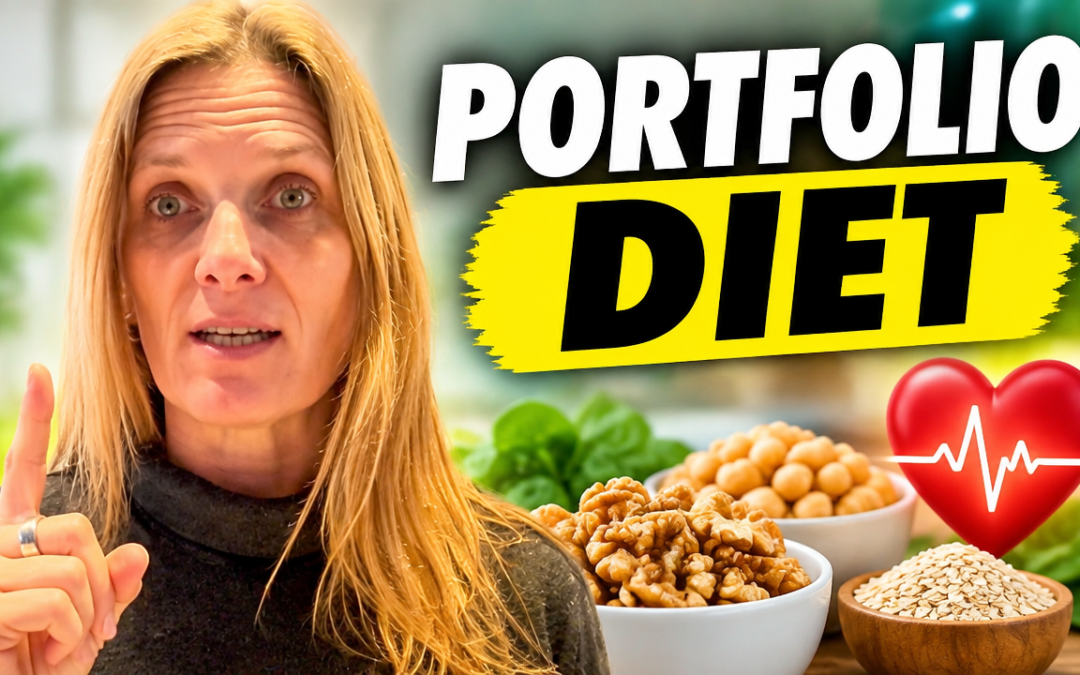
It’s called the Portfolio Diet.
Rather than focusing on one “superfood”, the Portfolio Diet combines a group of foods that can each help support healthier cholesterol levels in slightly different ways.
The main elements are:
-
nuts
-
plant proteins such as soya, beans and lentils
-
soluble or viscous fibre
-
plant sterols
-
an overall diet lower in saturated fat
Why is it called the Portfolio Diet?
Think of it like an investment portfolio.
Instead of putting everything into one investment, you spread things across several different areas.
The Portfolio Diet does something similar with food.
Rather than relying on one food to lower cholesterol, it combines several foods and plant compounds that work through different mechanisms.
That combination is what makes the approach interesting.
1. Nuts
The original Portfolio Diet included around 42g of nuts per day for someone eating approximately 2,000 calories.
That might include:
-
almonds
-
walnuts
-
pistachios
-
hazelnuts
-
cashews
-
pecans
-
peanuts
Nuts provide unsaturated fats, fibre and a variety of plant compounds.
And they’re easy to include.
You could add some to porridge or yoghurt, sprinkle them over a salad or simply have a small handful as a snack.
2. Plant proteins
Another key part of the Portfolio Diet is plant protein, particularly from foods such as soya and pulses.
Good options include:
-
tofu
-
tempeh
-
edamame
-
soya milk
-
soya yoghurt
-
beans
-
lentils
-
chickpeas
-
peas
The original Portfolio Diet aimed for around 50g of plant protein per day.
That doesn’t mean you need to become vegetarian or vegan.
For many people, it could simply mean replacing some meat-based meals with beans, lentils, tofu or other plant proteins more often.
3. Soluble or viscous fibre
Fibre is particularly important when we talk about cholesterol.
The Portfolio Diet focuses on viscous fibre, a type of soluble fibre that forms a gel-like substance in the gut.
This can help reduce the reabsorption of bile acids and cholesterol. The liver then needs to use more cholesterol from the bloodstream to produce new bile acids.
The original Portfolio Diet target was around 20g of viscous fibre per day.
Useful sources include:
-
oats
-
barley
-
psyllium
-
beans and lentils
-
aubergine
-
okra
-
apples
-
oranges
-
berries
You don’t necessarily need to start measuring every gram.
Something as simple as having oats at breakfast, beans or lentils with a meal and fruit during the day can start increasing your soluble fibre intake.
4. Plant sterols and stanols
Plant sterols are naturally occurring compounds found in plants.
They have a similar structure to cholesterol and can reduce the amount of cholesterol absorbed through the gut.
The Portfolio Diet uses around 2g of plant sterols per day.
Although plant foods naturally contain small amounts, getting the quantities used for cholesterol lowering usually means using foods fortified with plant sterols or stanols.
These might include certain:
-
yoghurt drinks
-
yoghurts
-
spreads
If you use one of these products, check the label to see how much plant sterol or stanol a serving provides.
A quick note on the amounts
The amounts above are the Portfolio Diet research targets, based on an intake of around 2,000 calories per day.
They are not the same thing as general daily requirements for everyone.
For example, the original Portfolio Diet used around 42g of nuts per day, while broader heart-health guidance often suggests a practical everyday portion of around 28–30g.
The Portfolio Diet uses around 2g of plant sterols per day, while current cholesterol-lowering guidance generally recognises an effective range of around 1.5–3g per day from fortified foods.
And the 20g fibre target refers specifically to viscous fibre, not total fibre intake. UK adults are still generally advised to aim for around 30g of total fibre per day.
So the Portfolio Diet gives us useful, research-backed targets, but you don’t need to hit every number perfectly to make worthwhile changes.
What about saturated fat?
The Portfolio Diet isn’t only about adding foods.
The underlying dietary pattern is also relatively low in saturated fat.
This means reducing foods such as:
-
butter
-
ghee
-
fatty and processed meats
-
cream
-
pastries and cakes
-
foods containing large amounts of coconut or palm fat
But the aim isn’t to remove all fat from your diet.
A better approach is often to replace saturated fats with unsaturated fats.
That could mean using olive or rapeseed oil instead of butter, including nuts and seeds, or adding foods such as avocado and oily fish.
How effective is the Portfolio Diet?
Research on the Portfolio Diet shows it can reduce LDL cholesterol, particularly when people follow the different components closely.
In highly controlled studies, LDL reductions approaching 30% have been seen.
In everyday life, where adherence is naturally less perfect, reductions tend to be more modest.
And I think that is an important point.
You don’t have to follow a diet perfectly for it to be useful.
The research suggests that the more closely people follow the Portfolio Diet, the greater the potential cholesterol-lowering effect.
You don’t have to change everything at once
One thing I like about the Portfolio approach is that it gives you several places to start.
You could ask yourself:
Could I eat oats more regularly?
Could I add beans or lentils to a few meals each week?
Could I have nuts instead of another snack?
Could I replace one meat-based meal with tofu or soya?
Could I swap some butter for olive or rapeseed oil?
You could start with just one or two changes and build from there.
What I want you to take away
If you have raised LDL cholesterol, nutrition can play an important role alongside your wider cardiovascular care.
The Portfolio Diet gives us a useful evidence-based framework centred around four key areas:
nuts + plant protein + soluble fibre + plant sterols
combined with an overall eating pattern lower in saturated fat.
It isn’t about finding one magic food.
It’s about building a collection or portfolio of everyday foods that work together.
So have a look at what you’re already eating.
How many Portfolio Diet foods are already part of your week?
You may be doing more for your cholesterol than you realise.
I’m Anita Wong, DipION, mBANT, Registered Nutritionist and founder of Nutrition Uncovered.
I help make nutrition easier to understand so you can make practical food choices to support your health, strength and energy.
If you’re unsure what your cholesterol results mean or which dietary changes would be most useful for you, personalised nutrition support can help you work out where to start.
Would you like more personalised nutrition support?
Knowing what to eat is one thing, but understanding how to make nutrition work for your individual health goals can sometimes feel more challenging.
At Nutrition Uncovered, I help people make practical, sustainable changes to their eating habits, whether that’s supporting metabolic health, maintaining muscle, improving heart health or simply feeling more confident about their food choices.
If you’d like to explore how personalised nutritional support could help you, I’d love to have a chat.
Anita Wong DipION mBANT
Registered Nutritional Therapist | Nutrition Uncovered
Fuel. Function. Energy.
Open Research Papers for reference:
Glenn AJ, et al. (2023). The Portfolio Diet Score and Risk of Cardiovascular Disease: Findings from Three Prospective Cohort Studies. Circulation. This gives you a more recent, longer-term perspective. It looked at over 200,000 participants across three large cohorts and found that greater adherence to the Portfolio Diet was associated with lower cardiovascular disease risk. The full article is available free through PubMed Central.
The portfolio dietary pattern and risk of cardiovascular disease mortality during 1988–2019 in US adults: a prospective cohort study (2025). In this study of 14,835 adults followed over 22 years, higher Portfolio Diet adherence was associated with lower cardiovascular, coronary heart disease and all-cause mortality. PubMed