

What the science says about breakfast, protein and metabolic health
Walk into any supermarket and you’ll be greeted by aisles full of breakfast cereals, cereal bars and pastries. Yet despite breakfast being one of the most talked-about meals of the day, it’s also one of the most misunderstood.
You’ve probably heard people say that breakfast is the most important meal of the day. Others argue that skipping breakfast is better for weight loss or metabolic health.
So who’s right?
The truth is that there’s no one-size-fits-all answer. Whether you choose to eat breakfast is a personal decision and depends on your lifestyle, health goals and individual needs.
However, if you do eat breakfast, what you choose to eat matters far more than simply eating something.
Why breakfast matters
For many people, breakfast provides the first opportunity to nourish the body after an overnight fast.
A well-balanced breakfast can help provide the nutrients needed to support energy levels, concentration and satiety throughout the morning.
Rather than reaching for highly processed cereals or sugary pastries, I encourage people to think about building a breakfast that combines:
- Protein
- Fibre
- Colourful plant foods
- Healthy fats
These are the foundations of what I call the Nutrition Uncovered approach to breakfast.
Why protein deserves a starring role
Protein becomes increasingly important as we get older.
From around our 30s onwards, we naturally begin to lose muscle mass unless we actively work to maintain it through resistance exercise and adequate protein intake.
As women move through menopause, this becomes even more important.
Including a source of protein at breakfast can help support muscle maintenance and contribute to feeling fuller for longer.
Some of my favourite breakfast protein sources include:
- Greek yoghurt
- Eggs
- Cottage cheese
- Kefir
- Oily fish such as salmon or mackerel
- Protein powder when appropriate
Don’t forget fibre
Unfortunately, most people in the UK don’t consume enough fibre.
Fibre supports digestive health, helps nourish our gut microbiome and plays an important role in heart and metabolic health.
One of my favourite breakfast ingredients is oats.
Oats contain beta-glucan, a soluble fibre that has been shown to help maintain healthy cholesterol levels as part of a balanced diet.
Other fantastic breakfast fibre sources include:
- Chia seeds
- Kiwi fruit
- Berries
- Pears
- Flaxseed
Adding just one or two of these foods to your breakfast each day can make a meaningful difference to your overall fibre intake.
Think beyond calories
As a former Cardiac Intensive Care Nurse and now a Registered Functional Nutritionist, I’ve become less interested in counting calories and more interested in helping people build meals that nourish their bodies.
Instead of asking:
“How many calories are in this breakfast?”
I encourage people to ask:
- Does it contain protein?
- Is there a source of fibre?
- Have I included colourful plant foods?
- Will it keep me satisfied until lunch?
These simple questions can transform the nutritional quality of your breakfast.
My Nutrition Uncovered Formula
Every breakfast I create follows three simple principles:
Fuel
Build meals around protein to support strength, muscle maintenance and healthy ageing.
Function
Support gut, heart and metabolic health with fibre-rich foods and a diverse range of plants.
Energy
Choose foods that provide steady, sustained energy rather than quick spikes followed by crashes.
Nutrition doesn’t have to be complicated.
Small changes, repeated consistently, often have the biggest impact.
Looking for inspiration?
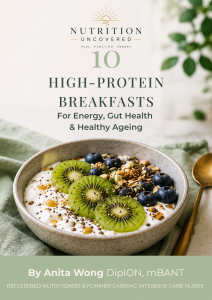
If you’re ready to upgrade your breakfasts, I’ve created a free guide featuring 10 High-Protein Breakfasts for Energy, Gut Health & Healthy Ageing.
Inside you’ll find:
- 10 simple recipes
- Everyday supermarket ingredients
- Nutrition Snapshots for every recipe
- Link to step-by-step videos
Whether you’re trying to eat more protein, increase your fibre intake or simply enjoy healthier breakfasts, I hope these recipes give you plenty of inspiration.
Anita Wong DipION, mBANT
Registered Functional Nutritionist
Fuel. Function. Energy.